

Why do we need CCUS?
Decarbonising Industry
CCUS is essential for industrial decarbonisation in sectors like fuels and refining, chemicals and fertlisers, glass and other manufacturing. These industries account for around 20% of Europe’s total human-caused emissions.
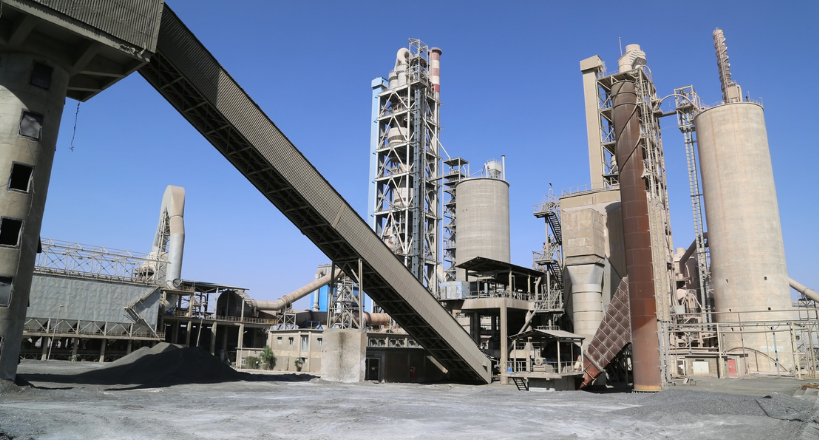
For many of these vital industries, CCUS presents the only viable route for reducing emissions and remaining competitive through the manufacturing of low-carbon products. For example, the cement industry creates up to 8% of global CO2 emissions; of which 50% is from the chemical process emissions (calcination) that releases CO2 from limestone, which is an unavoidable consequence of the production of products such as cement and lime, and 40% is from burning fuels to achieve the extreme high-temperature requirements to heat kilns. These emissions can therefore not be eliminated through electrification or fuel switching alone.
Low Carbon Power & Hydrogen
CCUS is crucial for our energy security by supplying reliable low-carbon power that is available at all times of the day and in all weathers. Gas-fired power stations with CCUS, used alongside all other forms of low-carbon energy generation such as renewables, will be able to provide flexible power on the system and provide essential backup for intermittent renewables in a low carbon energy system.
Low carbon (blue) hydrogen captures CO2 from natural gas reforming, and is a key step in large-scale, low-carbon hydrogen supply for transport and industry, complementing (green) hydrogen supply – produced with renewables.
Carbon capture plants can either be retrofitted onto existing power plants, or built as new power plants incorporating carbon capture, or ‘carbon-capture ready’, to be fitted once the CO2 infrastructure is in place.
Greenhouse Gas Removals
Greenhouse Gas Removals (GGRs) or Carbon Dioxide Removals (CDRs) remove CO2 from the atmosphere rather than from an industrial emitting source, creating negative emissions.
Direct Air Carbon Capture with Storage (DACS) removes CO2 directly from the atmosphere and then permanently stores it deep underground.
Bioenergy with Carbon Capture and Storage (BECCS) captures CO2 from the combustion of sustainable biomass (e.g. sustainable wood chips and plant matter) for renewable energy generation. CO2 has been absorbed from the atmosphere during growth of the biomass, and then captured post-combustion at the biomass power plant and permanently stored, resulting in carbon removals.
Waste to Energy with Carbon Capture and Storage (WECCS) captures CO2 from the combustion of waste, particularly the biogenic (plant-based) portion. The biogenic CO2 can be permanently stored, resulting in carbon removals.

Supporting the Global Economy
CCUS offers significant economic benefits, by attracting inward investment into projects and CO2 infrastructure developed for CCUS.
The global supply chain for the CCUS industry is worth many billions and the opportunities to export manufacturing components, CO2 storage and technical skills and expertise are growing as the CCUS industry scales up globally. CCUS creates thousands of jobs, both in the development and operation of projects, but also protects jobs in vital industries.
By providing a viable route to decarbonisation, CCUS prevents de-industrialisation and ensures industries remain competitive, able to produce the low-carbon products of the future and promote product and energy security by ensuring that there is less dependence on importing of critical manufactured goods.
This in turn promotes economic growth and revitalises industrial areas.

What is CCUS?
VIEW OUR WORK

DECARBONISE
INDUSTRIES

SUPPORT THE
ENERGY TRANSITION

PROVIDE
GREEN JOBS

HELP REACH
NET ZERO BY 2050

 Find out more