Bacton Hydrogen (BH2) - a resilient clean power hub unlocking hydrogen and CCS infrastructure
 Back

Summary
Bacton Hydrogen (BH2) demonstrates how a modestly sized, single CCS-enabled hydrogen production facility can unlock significant benefits across multiple business areas at relatively low cost, despite not being part of an established industrial CCUS cluster.
Project description
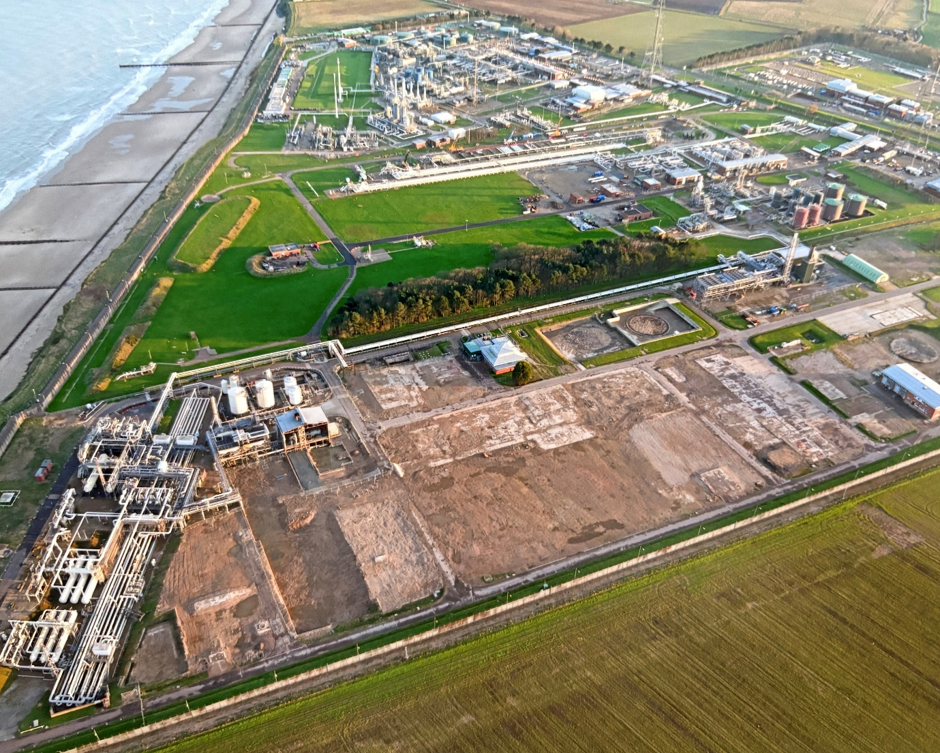
Bacton Hydrogen (BH2) is developing Bacton’s transition from a nationally important gas terminal into an integrated low-carbon energy hub, combining CCS-enabled hydrogen production, CO₂ transport and storage, hydrogen transport and storage, and dispatchable hydrogen-to-power generation.
The project is designed to make extensive use of existing onshore and offshore infrastructure and indigenous UK energy resources, with captured CO₂ transported to proximal, already licensed storage sites in the Southern North Sea. BH2 will initially develop a CCS-enabled hydrogen production facility supplying two or three power stations, alongside nationally significant hydrogen transport and geological storage infrastructure. This infrastructure will subsequently enable the integration and large-scale storage of green hydrogen produced using curtailed and low-cost renewable electricity from the extensive offshore wind resource in the Southern North Sea, which is expected to reach approximately 15GWe.
Project benefits
BH2 could enable centralised decarbonisation of up to 3,500 MWe of dispatchable power, reducing unabated gas use while providing system flexibility and resilience. The wider Bacton proposition could support c.8,0001 direct and 70,0001 indirect jobs through retention and growth of power generation, local industry and supply chains across the East of England, while providing a low-carbon transition for the regional oil and gas workforce. Initial CCS-enabled hydrogen is targeted from around 2032 and without timely progression, the UK risks losing investment, skilled employment and the opportunity to repurpose strategic infrastructure and establish a wider Southern North Sea CCS market.
1 ECITB Labour Forecasting Tool, for hydrogen and CCS across the East of England.
Proposed activity
BH2 aims to demonstrate how investment in a single project delivers multiple Government policy priorities advancing:
- A low carbon, dispatchable power generation hub created mainly by repurposing existing assets and fuelled by hydrogen from indigenous gas, contracted to minimise exposure to international gas price volatility;
- creation of hydrogen transport and storage infrastructure from repurposed gas infrastructure building on the Bacton terminal history as a primary link to Europe with extensive connections across the south of England;
- being an anchor source of CO2 supporting the creation of SNS export capacity and revenues;
- developing geological hydrogen storage for multi-day and seasonal resilience and the potential for electrolytic hydrogen production using curtailed offshore wind capacity
Activity to date
BH2 has created an increasingly integrated, full-chain proposition across hydrogen production, dispatchable power generation, CO₂ transport and storage, and hydrogen infrastructure. The integrated approach has the potential to deliver lower-cost dispatchable power than gas CCS and other alternatives. A pathway for hydrogen production and storage has been developed, including opportunities to utilise indigenous UK gas secured though price-stable, field-life contracts. Routes to proximal, already licensed Southern North Sea CO₂ storage, notably the ENI Bacton CCS Hewett store, are being developed.
The project is also establishing the wider conditions required for regional delivery through BEACON, the Bacton Energy and Carbon Network. BEACON provides a mechanism to coordinate the wider Bacton proposition, including potential European connectivity through the Projects of Mutual Interest, CarbonConnect and Hydrogen Interconnector initiatives, while helping to maximise and realise benefits for the local and regional economy.
H2 is also positioned to support international investment into the UK, including in the context of Sumitomo’s comprehensive MoU with the Department for Business and Trade (DBT), which provides a framework for participation in UK investment projects amounting to £7.5 billion through to 2035.
Lessons learned
- Having a clear target and commitment by Government to fully decarbonise the electricity supply system with a coherent plan on how this is to be achieved. This has allowed all investors to invest in creating a full chain multiparty value proposition.
- Costs, delivery risk and land impacts can be reduced substantially by repurposing existing infrastructure and linking with partners where objectives are synergistic.
- The current delays and potential stalling of CCS hydrogen and wider energy policy puts continued development by one or more of the interconnected parties involved at risk
- Structured regional coordination through BEACON helps align projects and ensure delivery of local jobs, supply-chain and economic benefits.
Pathway to a self-sustaining market
- A published Hydrogen Strategy with credible investment signal across the hydrogen value chain.
- A hydrogen to power Business Model that enables anchor demand and coordinated investment in production, infrastructure and power generation.
- A hydrogen storage Business Model and allocation process supporting offshore geological storage at material scale for energy security and clean-power resilience.
- A clear long-term pathway for expansion of UK CO₂ transport and storage beyond the initial clusters.
Asks of government
- Publish the hydrogen strategy with a credible investment signal to support local and international investment.
- Deliver, or set out the structure of the hydrogen to power Business Model during 2026.
- Deliver the hydrogen storage Business Model and allocation arrangements supporting geological storage beyond a single regional system.
- Provide long-term policy and investment visibility for CCS expansion beyond the initial clusters recognising the potential export capacity of the SNS
Next steps
- Government needs to publish and commit to a hydrogen strategy and hydrogen to power business model which gives confidence in continued, and increasing development expenditure to:
- Progress pre-FEED and FEED, consenting and detailed development of the integrated hydrogen and CCS proposition.
- Deliver robust offtake to the anchor dispatchable power sector via an identified business case for converting assets to hydrogen to power.
- Continue development of CO₂ transport and storage routes.
- Continue development of hydrogen transport with National Gas through repurposing of existing infrastructure.
- Progress indigenous gas supply opportunities, hydrogen storage development and engagement with regional power generators and infrastructure partners.
- Maintain full-chain coordination through BEACON and convert existing engagement into the commercial arrangements required for construction and clean-power delivery from around 2032.