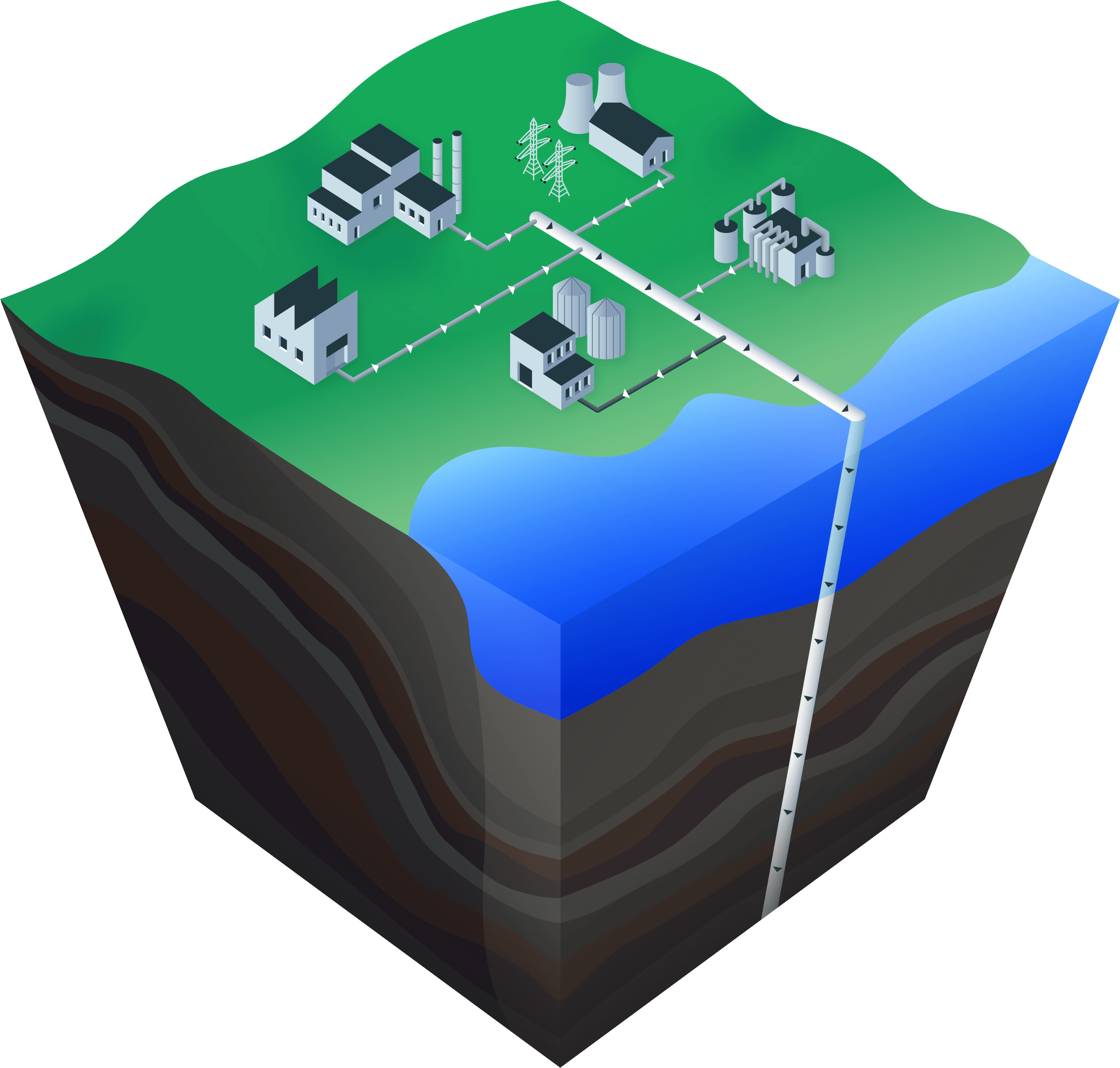
CCS uses established technologies to capture, transport and store carbon dioxide emissions from large point sources, such as power stations. It also has an important role to play to ensure manufacturing industries, such as steel and cement, can continue to operate, without the associated emissions.
CCS is a key tool in tackling climate change, providing energy security, creating jobs and economic prosperity.
The International Energy Agency (IEA) states that CCS could reduce global CO2 emissions by 19%, and that fighting climate change could cost 70% more without CCS.
From its base in London the Carbon Capture & Storage Association brings together specialist companies in manufacturing & processing, power generation, engineering & contracting, oil, gas & minerals as well as a wide range of support services to the energy sector such as law, finance, consultancy and project management.
The Association is a model for sectoral cooperation in business development and its existence is welcomed by government.
CCS, or Carbon Capture and Storage, is a low carbon technology which captures carbon dioxide (CO2) from the burning of coal and gas for power generation, and from the manufacturing of steel, cement and other industrial facilities. The CO2 is then transported by either pipeline or ship, for safe and permanent underground storage, preventing it from entering the atmosphere and contributing to anthropogenic climate change.
CCS can capture up to 90% of CO2 emissions from power generation or the production of steel and cement. On a typical (900MW) coal fired power plant with CCS, this means 5 million tonnes of CO2 could be captured each year – the equivalent of taking over 2 million cars off the road.
A round-up of the headlines this week