CCSA welcomes Conservative support for Carbon Capture & Storage

Menu

Archive for the ‘CCSA News’ Category

CCSA welcomes Conservative support for Carbon Capture & Storage

Posted on: June 13th, 2024 by ccsaEditor

[London, 11 June 2024]— On Tuesday the Conservative Party launched their manifesto at Silverstone setting out continued commitment to Carbon Capture, Utilisation and Storage (CCUS).

This builds on a significant amount of work undertaken by the industry and the Government to progress CCUS technology and the Cluster Sequencing Programme.

It is vitally important to recognise that the UK has an opportunity to develop the world’s first large-scale integrated CCUS clusters, which will provide British industry with the means to decarbonise their operations.

The Conservative Party’s continued commitment to progressing CCUS has provided much needed reassurance to the industry who are working to deliver on the target to store 50 million tonnes of CO2 a year by 2035.

However, with key financial decisions in Track-1 needed before the end of the summer and rapid progress on Track-2 projects, the UK needs to maintain momentum in this policy area if the country is to be a global leader in CCUS technology.

Olivia, UK Director of the Carbon Capture & Storage Association said:

“The CCSA has worked with industry to progress CCUS technology and deploy CCUS at scale through the Cluster Sequencing Programme and meet the UK’s target of capturing and storing 20-30Mt of CO2 by 2030, rising to 50-60Mt by 2035.

We welcome the Conservative Party’s manifesto commitment to support and deploy carbon capture, implement import carbon pricing, and back workforce transition initiatives. The CCSA continues to advocate for the deployment of four clusters by 2030, with key financial decisions on Track-1 needed before the end of the summer and urgent progress on deploying Track-2 and Track-1 Expansion.

CCUS offers substantial environmental and economic benefits, in addition to preserving jobs and creating new opportunities across the UK’s industrial heartlands. Maintaining momentum in CCUS deployment is imperative to ensure that we decarbonise British industry and retain our position as a world leader in this important industry.”

Notes to Editors
CCUS, or Carbon Capture, Utilisation and Storage, is a key low carbon solution – vital to meeting the UK’s statutory Net Zero target at least cost. CCUS enables the production of clean power, clean products (such as steel and cement) and clean hydrogen – which can then be used to decarbonise heating and transport. In addition, CCUS also enables greenhouse gas removal from the atmosphere through Direct Air Capture with Storage (DACS) or Bioenergy with CCS (BECCS).

The CCSA is the trade association accelerating the commercial deployment of CCUS, with offices in the UK and Belgium. We work with members, governments and other organisations to ensure CCUS is developed and deployed at the pace and scale necessary to meet net zero goals and deliver sustainable growth across regions and nations.

The CCSA currently has over 100 member companies who are active in exploring and developing different applications of carbon capture and removals, CO2 transportation by pipeline and ship, utilisation, geological storage, and other permanent storage solutions, end-users such as power, industry, waste, fuels, and hydrogen production sectors, plus supply chain, engineering, construction and management, legal and financial consulting sectors.

For media enquiries please contact Joe Butler-Trewin on 07908 141 067/ joe.butler-trewin@ccsassocaition.org.

[End]

CCSA welcomes Liberal Democrats CCUS manifesto commitments

Posted on: June 13th, 2024 by ccsaEditor

[London, 11 June 2024]— On Monday the Liberal Democrats pledged support for Carbon Capture, Utilisation & Storage (CCUS) in their 2024 General Election Manifesto.

As the leading trade association for accelerating the commercial deployment of CCUS across the UK, the CCSA welcomed the Liberal Democrats ambition to support carbon capture and storage, and new low-carbon processes for cement and steel production.

CCUS offers British industry the ability to reduce emissions, as well as protect jobs and create new, high-skilled opportunities across industrial heartlands.

The industry is at a pivotal stage and it is important that the cluster sequencing programme be fully supported and rolled out at scale and speed. This will ensure that the UK does not lose the first mover advantage in establishing a world leading CCUS industry.

Ruth Herbert, Chief Executive of the Carbon Capture & Storage Association said:

“The CCSA is pleased to see that the Liberal Democrats have set out in their 2024 General Election manifesto commitments to reduce emissions from industrial processes by supporting carbon capture and storage, and implementing the Carbon Border Adjustment Mechanism for high-emissions products.

To meet the UK’s target of 20-30 MT of CO2 captured and stored by 2030, rising to 50-60Mt by 2035, we need to deploy CCUS at scale and the UK has a unique opportunity to lead the world in this technology.

Through the development and deployment of CCUS, we can preserve 77,000 jobs in industries like cement and glass, and create 70,000 new, high-quality jobs in industrial heartlands.

CCUS has a vital part to play in the UK’s net zero transition plans, helping to deliver a sustainable and prosperous future for British industry.”.

Notes to Editors
CCUS, or Carbon Capture, Utilisation and Storage, is a key low carbon solution – vital to meeting the UK’s statutory Net Zero target at least cost. CCUS enables the production of clean power, clean products (such as steel and cement) and clean hydrogen – which can then be used to decarbonise heating and transport. In addition, CCUS also enables greenhouse gas removal from the atmosphere through Direct Air Capture with Storage (DACS) or Bioenergy with CCS (BECCS).

The CCSA is the trade association accelerating the commercial deployment of CCUS, with offices in the UK and Belgium. We work with members, governments and other organisations to ensure CCUS is developed and deployed at the pace and scale necessary to meet net zero goals and deliver sustainable growth across regions and nations.

The CCSA currently has over 100 member companies who are active in exploring and developing different applications of carbon capture and removals, CO2 transportation by pipeline and ship, utilisation, geological storage, and other permanent storage solutions, end-users such as power, industry, waste, fuels, and hydrogen production sectors, plus supply chain, engineering, construction and management, legal and financial consulting sectors.

For media enquiries please contact Joe Butler-Trewin on 07908 141 067/ joe.butler-trewin@ccsassocaition.org.

[End]

CCSA co-signs industry joint recommendations for Low-Carbon Fuels Certification in the EU

Posted on: June 13th, 2024 by ccsaEditor

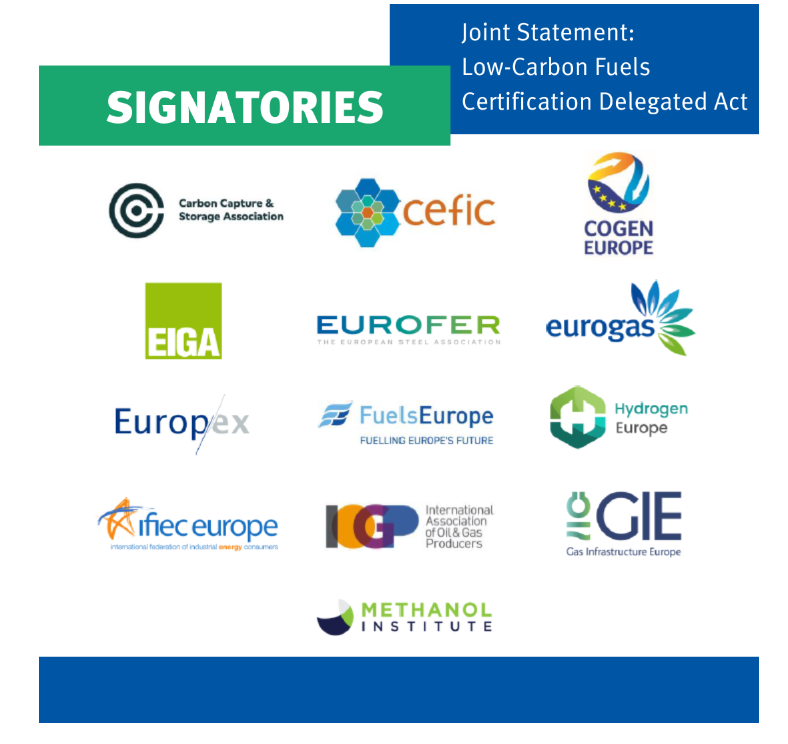
The CCSA has signed a joint statement on the Low-Carbon Fuels Certification Delegated Act. The co-signatories of this letter welcome the intention of the European Commission to define the necessary elements for the certification of low-carbon fuels to support a clear regulatory framework, a prerequisite for their needed ramp-up.

The co-signatories:

Read the joint statement here.


CCSA Welcomes the North Sea Transition Authority’s Carbon Storage Initiative

Posted on: May 1st, 2024 by ccsaEditor

The CCSA welcomes the North Sea Transition Authority’s announcement yesterday, opening an Out-of-Round application process for a carbon storage licence in the English Channel. This move signifies a crucial step towards supporting the decarbonisation efforts not only in the south of England but also beyond.

Carbon Capture, Utilisation and Storage (CCUS) plays an indispensable role in the UK’s journey towards achieving net zero. It not only facilitates decarbonisation but also holds significant economic benefits.

The CCSA stresses the importance of continued collaboration between Industry and Government to realise the full potential of CCUS in achieving net zero emissions and driving economic growth in the UK and beyond to help deliver the CCUS vision set out by the Department for Energy Security and Net Zero.

Read more on the announcement here.

For media enquiries please email: press@ccsassociation.org

Notes to Editors

About CCUS

CCUS, or Carbon Capture, Utilisation and Storage, is a key low carbon solution – vital to meeting the UK’s statutory Net Zero target at least cost. CCUS enables the production of clean power, clean products (such as steel and cement) and clean hydrogen – which can then be used to decarbonise heating and transport. In addition, CCUS also enables greenhouse gas removal from the atmosphere through Direct Air Capture with Storage (DACS) or Bioenergy with CCS (BECCS).

About the CCSA

The CCSA is the lead European association accelerating the commercial deployment of CCUS. We work with members, governments, and other organisations to ensure CCUS is developed and deployed at the pace and scale necessary to meet net zero goals and deliver sustainable growth across regions and nations.

The CCSA currently has over 100 member companies who are active in exploring and developing different applications of carbon capture, CO2 transportation by pipeline and ship, utilisation, geological storage, and other permanent storage solutions, as well as members from management, legal and financial consulting sectors.

To find out more about the CCSA please visit the CCSA website here.

Recent CCSA publications

Posted on: April 30th, 2024 by ccsaEditor

Download the CCSA’s Member Services Leaflet

Download the CCSA’s recent publications below:

Green Jobs Delivery Group – CCS Task and Finish Group: Findings and recommendations of the group

CCSA EU Manifesto 2024-2029: CCUS paving the way to a Net Zero Europe

CCSA Spring Budget Submission Report 2024

Delivering opportunity and green growth in our industrial communities: A manifesto for the United Kingdom from the CCSA

CCSA CCUS Delivery Plan Update 2023 – full report & executive summary

CCSA CCUS Supply Chain Good Practice Guidance Document – full report & executive summary

CCSA Workforce & Skills Position Paper – full report & executive summary

The CCSA, bp, ECITB, and CATCH Unveil New Report on Green Jobs and Carbon Capture & Storage

Posted on: April 22nd, 2024 by ccsaEditor

[London, 22nd April 2024] – Today, the Carbon Capture and Storage (CCS) Task and Finish Group (T&FG), comprising of the Carbon Capture & Storage Association (CCSA), bp, and the Engineering Construction Industry Training Board (ECITB), announced the publication of their joint report, “Green Jobs Delivery Group – CCS Task and Finish Group, findings and recommendations of the group”. The report, announced at the CATCH training centre, in Stallingborough, signifies a significant milestone in shaping the future of green jobs in the UK. It will provide vital insights and recommendations to address critical skills gaps and opportunities in the CCS sector.

The report sets out the findings and conclusions from the extensive work of the CCS T&FG. It serves to inform the government’s Green Jobs Action Plan while enabling the CCS sector to navigate skills challenges and opportunities effectively. Focussed primarily on the transport and storage aspects of the CCS sector, the report provides key insights from comprehensive sector-wide inputs between mid-2023 and early 2024.

It highlights that CCS can play a pivotal role in industrial decarbonisation, particularly in unlocking opportunities in blue hydrogen production and in the safeguarding of existing heavy industries and deliver a significant contribution to the future of the UK economy. It also notes that the sector offers opportunities for a transitioning workforce and for international collaboration.

An in-depth labour market analysis revealed the projected workforce demand for CCS transport and storage roles from 2023-2030. Projections show potential peaks of up to 3,000 direct roles in a single year by 2030, with broader direct CCS sector roles peaking at up to 15,000 in a single year during the same period. The report underscores the urgency of addressing skills shortages to ensure the successful deployment of CCS projects.

The analysis also identified critical ‘pinch points’ in occupational demand – including across welding, pipefitting, and geosciences – highlighting challenges such as overlapping skill requirements with other sectors, aging labour profiles, and workforce diversity concerns. The report emphasises the importance of addressing skills shortages to maximise the accessibility of these role to local workforce, avoid inflation of labour costs and maintain the sector’s competitiveness.

The report proposes three key sets of actions to address skills challenges effectively:

• Continued and increasingly galvanised industry investment in skills development initiatives, including STEM outreach, apprenticeship programmes, and vocational training.
• Enhanced place-based coordination of skills activities within CCS clusters, supported by wider cross-government policies to drive CCS deployment.
• Sustained government support and investment in CCS policy to provide certainty for job creation and skill development.

Olivia Powis, UK Director at the CCSA, said:

“The findings of this report highlight the critical importance of urgent and targeted interventions to tackle skills shortages and promote workforce development in the CCS sector. By aligning industry initiatives with government policies, we can collaboratively address challenges and opportunities in CCS deployment, driving economic growth and achieving net zero ambitions while fostering a sustainable future for generations to come.”

Andy Lane, VP of Hydrogen and CCUS for the UK, and Chair of The CCS Task and Finish Group said:

“CCS will play a vital role in the UK’s net zero transition plans and could make a substantial contribution to the future of the UK economy. To deliver on that potential it will need the combined efforts of Government, industry, skills bodies, unions and others to help the UK build the skills the sector needs to thrive. This report is a great example of that collaboration in action and is another important step for the future of the sector.”

Andrew Hockey, CEO of the ECITB said:

“Collaboration among diverse stakeholders is the cornerstone of progress. It was a privilege for the ECITB to contribute towards the joint endeavour of producing this report which highlights the fusion of expertise from our respective organisations and emphasises the importance of skills development in driving forwards our collective journey towards a greener and more resilient economy. Increased investment from both industry and government in developing skills initiatives and vocational training will bolster our ability to integrate CCS technologies into our industrial and energy sectors. This will enable us to bridge the gap between our current reliance on fossil fuels and a future where we can sustain energy security through renewable sources.”

David Talbot, CEO CATCH said:

“CATCH was delighted to host the unveiling of the new Green Jobs and Carbon Capture & Storage report. Standing at the forefront of the transformation, CATCH aim to deliver 1000 new entrants to industry per year by 2029, with our vision for a new National Net Zero Training Centre. This initiative is a direct response to the urgent need highlighted in recent labour market analysis, which forecasts a significant increase in workforce demand across industrial clusters by 2030. The new centre, backed by CCS industries, is designed to address critical ‘pinch points’ in demand for welding & pipefitting skills, ensuring learners are well-prepared to contribute to the sector’s growth. By focusing on specialised training and development, we are taking a proactive step towards mitigating skill shortages, enhancing workforce diversity, and fostering a competitive edge within the industry.”

For media enquiries please email: press@ccsassociation.org

ENDS

Notes to Editors

The full report is available for download here.

About CCUS

CCUS, or Carbon Capture, Utilisation and Storage, is a key low carbon solution – vital to meeting the UK’s statutory Net Zero target at least cost. CCUS enables the production of clean power, clean products (such as steel and cement) and clean hydrogen – which can then be used to decarbonise heating and transport. In addition, CCUS also enables greenhouse gas removal from the atmosphere through Direct Air Capture with Storage (DACS) or Bioenergy with CCS (BECCS).

About the CCSA 

The CCSA is the lead European association accelerating the commercial deployment of CCUS. We work with members, governments, and other organisations to ensure CCUS is developed and deployed at the pace and scale necessary to meet net zero goals and deliver sustainable growth across regions and nations.

The CCSA currently has over 100 member companies who are active in exploring and developing different applications of carbon capture, CO2 transportation by pipeline and ship, utilisation, geological storage, and other permanent storage solutions, as well as members from management, legal and financial consulting sectors.

To find out more about the Carbon Capture Storage Association (CCSA) please visit the CCSA website here.

About bp

bp intends to invest up to £18 billion in the UK’s energy system by the end of 2030, demonstrating bp’s firm commitment to the UK, and helping the country to deliver on its bold ambitions to boost energy security and reach net zero. As one of the largest oil and gas producers in the UK, bp intends to continue investing in North Sea oil and gas, while working to drive down operational emissions. bp is also in action on a range of lower carbon energy investments in the UK, which are expected to bring jobs and develop new skills and capabilities. 

About ECITB

The Engineering Construction Industry Training Board (ECITB) is the employer-led skills body for the Engineering Construction Industry in Great Britain.
A non-departmental public body sponsored by the Department for Education, the ECITB works with employers and government to attract, develop and qualify personnel across a wide range of craft, technical and managerial disciplines.
We invest around £28 million every year to enhance skills across the engineering construction industry, support growth through workforce training, and tackle labour shortages and skills gaps. www.ecitb.org.uk

About CATCH

CATCH is a leader in adult skills and apprenticeships driven by industrial members, rooted deeply in industry. Established in 1999 to support the £6 billion Humber chemical and process sectors. Our state-of-the-art training centre was launched in 2006, and CATCH Skills quickly followed in 2017. CATCH Apprenticeships was born in 2021, marking a new era of industrial training and development. The CATCH Welding & Pipefitting Hub, launched September 2023, is an employer led project to ensure that our region has the right level of skills to meet the demand not only for existing projects in the process industry sector but to enable the UK to deliver the mega-scale engineering construction projects that industrial decarbonisation of our industry requires.
The Carbon Capture and Storage Association presents the CCSA EU Manifesto 2024-2029: CCUS paving the way to a Net Zero Europe

Posted on: March 25th, 2024 by ccsaEditor

In light of the upcoming 2024-2029 EU legislative term, the Carbon Capture and Storage Association (CCSA) is delighted to announce the publication of the CCSA EU 2024 Manifesto: CCUS paving the way to a Net Zero Europe.

The CSSA EU Manifesto 2024 presents our vision on how European policymakers can establish the basis for the commercialisation of CCUS technologies and deliver a robust CCUS market in Europe.

We have identified the steps that the EU institutions, as well as EU Member States and neighbouring countries, need to take during the legislative term 2024-2029.

These are:

– Defining schemes to support CCUS investments.

– Europe-wide agreement on ambitious capture and storage targets.

– Emphasising the importance of clear regulatory frameworks for CO2 transport.

– Advancing international and cross-border cooperation.

– Support low carbon products.

– Build public support and project-level communications.

Discover more on the CCUS industry priorities for the 2024-2029 EU legislative term by downloading the Manifesto here.

European delegation visits North-Eastern carbon capture clusters amid push to deploy technology across the UK

Posted on: March 12th, 2024 by ccsaEditor

[London, 12th March 2024] – Last week, European diplomats visited carbon capture business in the north of England to witness the roll out of the vital technology across the UK’s industrial regions and explore how the rollout of the UK Carbon Capture, Utilisation and Storage (CCUS) industry can support the UK and EU’s journey to net zero and boost economic investment into the UK.

Officials from the EU Delegation to the UK and nine EU Member States spent two days carrying out fact-finding visits in the Humberside and Teesside clusters, supported by the Carbon Capture and Storage Association, (CCSA.)

On March 7, the group viewed the Humber Freeports, including visits to the Phillips 66 Immingham Refinery, and the CATCH Skills Training Facility, where they met with partners of Viking CCS, one of the UK’s ‘CCUS Clusters’. On March 8, the delegation met innovative, Leeds based Carbon capture technology developer, C-Capture, before travelling to see the Teesworks Skills Academy and meet members of the East Coast Cluster, including BP, the Northern Endurance Partnership and Net Zero Teesside Power.

A networking event was held in Leeds to facilitate discussions between the delegation, CCSA members and UK CCUS industry partners and government representatives. The visit emphasised the importance of collaboration in advancing CCUS technology innovation.

Deployment of CCUS technology is vital for meeting the UK’s Net Zero targets. It will enable energy intensive industries making products such as cement and glass to continue manufacturing in the UK while still cutting emissions. As a result, CCUS technology is expected to generate 70,000 new skilled jobs and protect 77,000 existing jobs.

CCSA analysis suggests UK CCUS companies could attract up to £30 billion in private sector investment by 2030 if the Government puts in place the right support now. This will ensure the industry becomes self-sustaining while helping to meet government targets of capturing 20-30 million tonnes of CO2 by 2030.

Olivia Powis, UK Director at the CCSA, said:

“This visit highlights the positive progress in driving policy development and facilitating the deployment of CCUS technologies both in the UK and across the EU.

“We were pleased to support the European delegation’s visit and give them the opportunity to see Viking CCS and the East Coast Cluster as well as an overview of the significant progress being made in the UK’s industrial regions towards achieving net zero ambitions through CCUS technology. By fostering dialogue and collaboration with our European partners, we are helping to secure a sustainable and low-carbon future while safeguarding critical industries in the UK and across the EU.”

The members of the European Delegation said: ”During this insightful two-day visit, we have witnessed the progresses of two UK clusters committed to decarbonise crucial industrial sectors of the UK economy that account for a significant portion of UK emissions. We have observed the determination with which these stakeholders are working in achieving these objectives and helping UK in its journey toward net zero.”

The European delegation included members of the EU Delegation to the UK, of the Embassies of Poland, Hungary, Slovenia, Croatia, Latvia, Germany and France, and of Advantage Austria.


Notes to Editors

CCUS, or Carbon Capture, Utilisation and Storage, is a key low carbon solution – vital to meeting the UK’s statutory Net Zero target at least cost. CCUS enables the production of clean power, clean products (such as steel and cement) and clean hydrogen – which can then be used to decarbonise heating and transport. In addition, CCUS also enables greenhouse gas removal from the atmosphere through Direct Air Capture with Storage (DACS) or Bioenergy with CCS (BECCS).

The Carbon Capture Storage Association (CCSA) is the lead European association accelerating the commercial deployment of CCUS. We work with members, governments and other organisations to ensure CCUS is developed and deployed at the pace and scale necessary to meet net zero goals and deliver sustainable growth across regions and nations.

The CCSA currently has over 100 member companies who are active in exploring and developing different applications of carbon capture, CO2 transportation by pipeline and ship, utilisation, geological storage, and other permanent storage solutions, as well as members from management, legal and financial consulting sectors.

For media enquiries please email press@ccsassociation.org

To find out more about the CCSA please visit the CCSA website at http://www.ccsassociation.org/

The Carbon Capture and Storage Association Spring Budget Submission for Paving the Way to a Sustainable Future 

Posted on: February 14th, 2024 by ccsaEditor

[London, 14 February 2024] – The critical steps the UK Government needs to take to secure a thriving carbon capture industry and thousands of high skilled jobs have been set out today by the Carbon Capture & Storage Association (CCSA) as it published its 2024 Spring Budget submission.  

The submission sets out proposals and recommendations for how Carbon Capture, Utilisation, and Storage (CCUS) can be harnessed to decarbonise key UK industries, protecting existing jobs in industrial regions and creating new ones. 

Projections suggest that UK CCUS has the opportunity to attract private sector investment of up to £30 billion by 2030, as a result of its healthy development pipeline and mature legislative framework. This aligns with government targets of capturing 20-30 million tonnes of CO2 by 2030, doubling to 50 million tonnes by 2035. 

Investment in CCUS is expected to generate 70,000 new skilled jobs and protect 77,000 existing jobs, particularly in industries like cement and chemicals where carbon dioxide is released during production processes, regardless of the heat source used. Furthermore, CCUS deployment will position the UK to attract significant private investment, drive job creation, and ensure supply chain and energy security.  

But the submission warns timely delivery of government commitments and clarity on future funding are essential to build investor confidence, unlock this level of investment and secure the full supply chain benefits of UK CCUS.   It asks the Chancellor to establish annual revenue support matched to government targets, estimated at £2-3 billion annually from 2028 onwards (including the £1 billion a year already committed in Spring Budget 2022), to underwrite deployment levels until CCUS becomes self-sufficient in the 2030s.   

CCSA analysis suggests government support will fall away sharply by the mid-2030s as volumes of carbon captured surge towards 50-60 million tonnes a year. The level of the proposed revenue support is significantly less than that provided to cultivate a wind industry in the 2011 Levy Control Framework.  Failure to act swiftly risks hindering industry growth and additional costs for achieving the UK’s targets. 

The CCSA urges the government to allocate swiftly the current £1bn a year already assigned to its CCUS Programme – funds that were announced almost a year ago but where Final Investment Decisions have still not yet been taken.  These pending decisions on eight projects represent around one third of the UK’s 2030 target for CO2 storage.  With lead-in times of 6-7 years for CO2 storage sites and 3-4 years for capture projects, time is running out to meet 2030 targets and therefore it is important that the Chancellor takes this opportunity to provide confidence to project developers to continue with their UK projects in a rapidly accelerating global market competing for private capital. 

Ruth Herbert, Chief Executive said: 

“The proposals and recommendations set out in the CCSA’s Spring Budget Submission reflect a significant opportunity for the UK, not only to meet decarbonisation targets but to retain our supply chain industries and attract new businesses to the UK to take advantage of this infrastructure. As deployment begins to ramp up around the world, UK can play a leading role in the rapidly growing global CCUS market. Significant progress has been made by the government in 2023, however increased pace and forward visibility are paramount for investor and supply chain confidence. We look forward to continued collaboration as we stand on the cusp of developing a thriving and resilient CCUS sector here in the UK.” 

Read the CCSA Spring Budget Submission 2024 here.

Notes to Editors  

CCUS, or Carbon Capture, Utilisation and Storage, is a key low carbon solution – vital to meeting the UK’s statutory Net Zero target at least cost. CCUS enables the production of clean power, clean products (such as steel and cement) and clean hydrogen – which can then be used to decarbonise heating and transport. In addition, CCUS also enables greenhouse gas removal from the atmosphere through Direct Air Capture with Storage (DACS) or Bioenergy with CCS (BECCS).  

The CCSA is the trade association accelerating the commercial deployment of CCUS, with offices in the UK and Belgium. We work with members, governments and other organisations to ensure CCUS is developed and deployed at the pace and scale necessary to meet net zero goals and deliver sustainable growth across regions and nations.  

The CCSA currently has over 100 member companies who are active in exploring and developing different applications of carbon capture and removals, CO2 transportation by pipeline and ship, utilisation, geological storage, and other permanent storage solutions, end-users such as power, industry, waste, fuels, and hydrogen production sectors, plus supply chain, engineering, construction and management, legal and financial consulting sectors.  

Further background and guidance on the UK Government’s Cluster Sequencing Programme can be found here: https://assets.publishing.service.gov.uk/government/uploads/system/uploads/attachment_data/file/1043088/ccus-cluster-sequencing-phase-2-guidance.pdf   

For media enquiries please contact Joe Butler-Trewin on 07908 141 067/ joe.butler-trewin@ccsassocaition.org.   

[End] 

CCSA welcomes the publication of the EU Industrial Carbon Management Strategy

Posted on: February 6th, 2024 by ccsaEditor

Today, the European Commission published its ground-breaking Industrial Carbon Management Strategy, marking a pivotal moment in the EU’s plans to fight climate change.

The Industrial Carbon Management (ICM) Strategy, unveiled by the European Commission, positions Carbon Capture, Utilization, and Storage (CCUS) technologies as central to the European Union’s climate policy.

This strategic move underscores the critical role of CCUS in achieving the ambitious goal of Net-Zero emissions by 2050.

Speaking on the significance of the ICM Strategy, Joop Hazenberg, EU Director of the CCSA, expressed, “The Industrial Carbon Management Strategy is an important leap forward towards establishing CCUS in Europe. We applaud the European Commission for championing CCUS and fostering an environment conducive to increased investments in European projects, which the strategy acknowledges are critical to achieving EU CO2 reduction targets and securing the future of European industries.”

Key Highlights:

This strategic framework sets a clear path for the deployment and scaling of CCUS technologies, ensuring Europe’s transition to a sustainable and Net-Zero future.


For media enquiries, please contact:

Stefano Miriello  – stefano.miriello@ccsassociation.org

Andres Vilan  –  andres.vilan@ccsassociation.org